
CLEAN INSIGHTS / Protection & climate
Assessing dust in IT: quantity, type and affected areas
Based on a LinkedIn post published on .
A photograph shows visible deposits, but cannot reliably establish their composition or conditions inside devices. Assessment considers dust type, source and distribution.
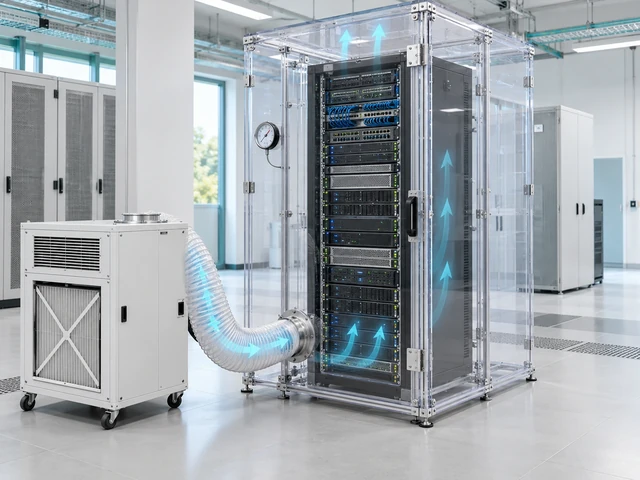
Visible deposits are a starting point
Deposits on enclosures or floors show that dust is present. They do not reliably tell you the condition inside equipment. Record visible findings alongside room layout, air paths and the event that introduced the dust.
Assess dust type separately from quantity
A thick visible dust layer and a small quantity of unknown residue are different findings. The source, such as construction or material processing, belongs in the assessment. Colour or a photograph cannot reliably establish a residue’s specific properties. Uncertainty may require specialist investigation.
How can particles affect hardware?
Deposits on air inlets, heat sinks and fans can impair airflow and heat removal. Fan deposits may also change mechanical loading. Other risks depend on composition: certain residues can promote corrosion in the presence of moisture, while hygroscopic particles absorb moisture. Conductive metal debris or carbon-containing residues can contribute to electrical faults, including short circuits. Visible dust quantity alone cannot establish these properties.
Map ingress routes and distribution
Potential routes include construction access, packaging areas, opened ceilings and uncoordinated room works. Record affected zones and where further dust may enter. Include technical support rooms and distributed IT cabinets where relevant. For sudden dust ingress, call to discuss our IT contamination support.
Use measurements with a purpose
Particle counting describes the measured concentration under the stated conditions. It does not itself determine every residue’s composition or each device’s technical condition. Establish the question to be answered before commissioning measurements or further investigation. Our particle measurements and environmental checks are planned around such a question.
FOR YOUR PLANNING
Your checklist at a glance
- Are the source and affected areas recorded?
- Are visible findings separated from assumptions?
- Is the question defined before measurement?