
CLEAN INSIGHTS / Restoration
Construction dust in IT: protection before work and cleaning afterwards
Dust protection starts before construction. If dust has already entered, room surfaces and affected device interiors need separate attention during restoration.
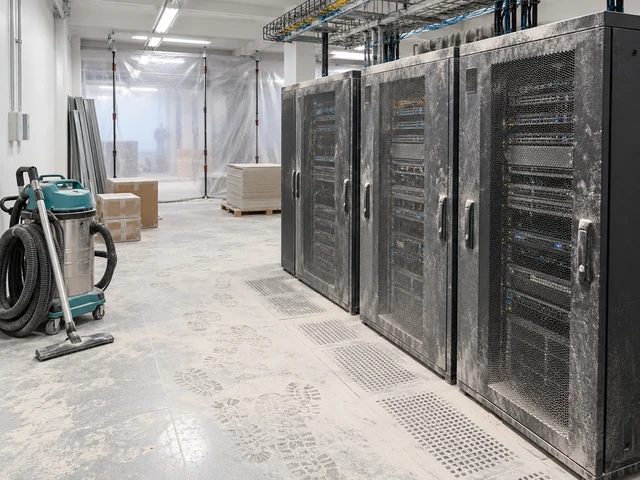
Plan protection before construction starts
Bring IT, facility management and construction leads together early. Establish work zones, routes and access, and decide how IT will be protected. Give cleaning and handover their own place in the construction schedule. Our dust protection during construction therefore starts at the preparation stage.
Plan temporary protected areas carefully
Where suitable, an enclosure supplied with HEPA-filtered air may provide a positive-pressure zone. Consider airflow, access and existing cooling together. Include temperature and agreed pressure and operating conditions in the coordinated checks during construction.
Assess the extent after dust ingress
Review affected room surfaces, racks, trays, raised floors and devices with the responsible team. Record when and where dust appeared and the preceding work. Device types and existing alarms inform planning but do not replace specialist assessment.
Coordinate room cleaning and device decontamination
Cleaning the surroundings does not automatically remove deposits inside equipment. Agree internal cleaning separately for affected servers, switches and other devices. Plan required shutdowns, equipment access and an appropriate ESD workstation for approved assemblies.
Coordinate dust capture and air cleaning
Select methods for controlled dust capture. HEPA air cleaning may supplement the approach. Uncontrolled blowing into the room is not a general solution to contamination. The equipment, deposits and manufacturer requirements determine the method.
FOR YOUR PLANNING
Your checklist at a glance
- Is protection planned before construction starts?
- Are room surfaces and devices assessed for dust ingress?
- Are dust capture and supplementary air cleaning coordinated?